


Introduction
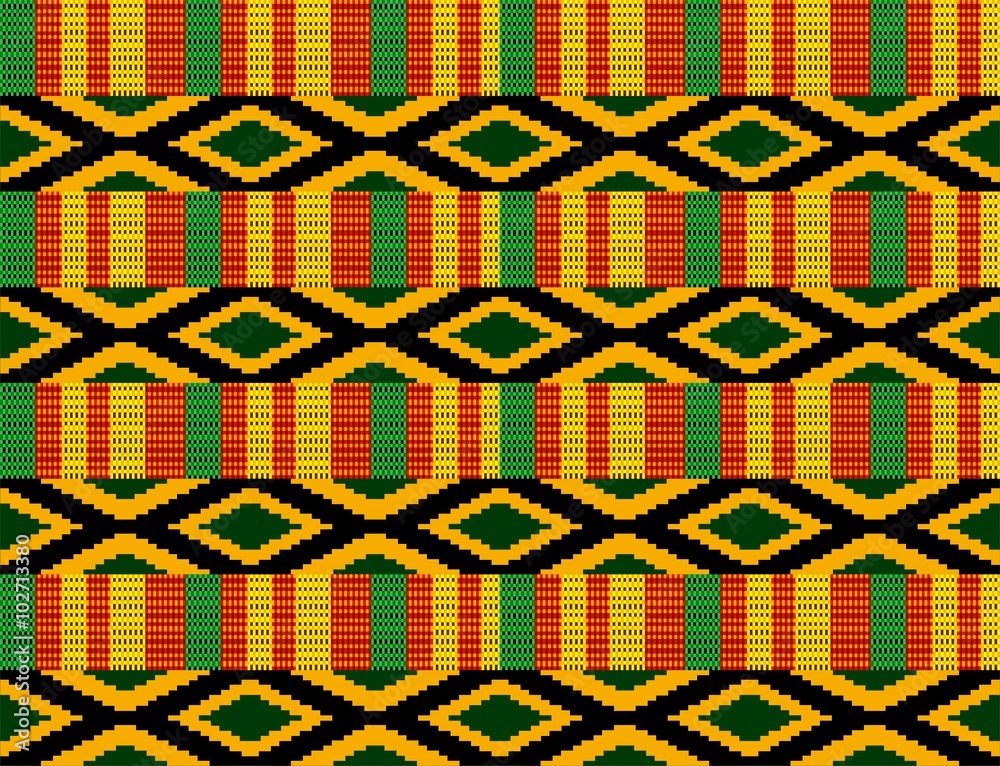
Before social media provided a platform for instant and continuous conversation on the origin of Kente (or Kete) clothing in Ghana, articles about its origin have filled newspapers and academic communities for a while. These articles had few things in common; it was either pointing Asante or Ewe communities as originators.
The Clash of Traditions
The origins of Kente (or Kete) cloth in Ghana involve deep ethnic pride between the Asante (Ashanti, part of the Akan peoples) and Ewe communities.
Oral traditions often clash, with each group claiming primacy, and many public debates or newspaper pieces rely heavily on those stories without broader evidence.
A more balanced view draws from academic sources, museum records, historical accounts, and material analysis.
West African weaving traditions, strip-weaving on narrow horizontal looms (double-heddle) is an ancient West African practice, with roots potentially dating back centuries or even over a millennium in the region.It existed among various groups before the rise of the Asante Empire or the advent of Ewe into their present location. Materials like cotton were local, while silk (later rayon or lurex) came through trade networks from North Africa, Europe, and Asia.
Both Asante and Ewe weavers use similar loom technology today, suggesting centuries of mutual influence over time through trade, migration, and conflict (including Asante conquests of Ewe areas in the 18th century).
Kente (Asante term) or Kete (Ewe term) refers to handwoven strip cloth sewn into larger pieces.
The word “Kente” likely derives from the Akan/Twi “kenten” (basket), evoking the basket-like interlaced patterns of early raffia or cotton versions. Ewe speakers sometimes argue “Kete” is the original term, with “Kente” as a corruption when Asante adopted or adapted the craft.
Asante Perspective and Evidence
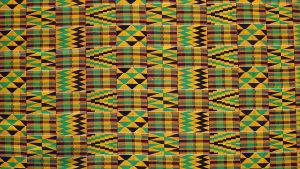
Many historical and scholarly accounts attribute the development of the colourful, prestige-oriented Kente with bold geometric patterns to the Asante in the 17th–18th centuries.
According to oral tradition, two brothers (often named Ota Karaban/Koragu and Kwaku Ameyaw) in Bonwire (near Kumasi) observed a spider (Ananse) weaving a web and replicated it on a loom. This is tied to the rise of the Asante kingdom under leaders like Osei Tutu I, with Kente becoming royal regalia.
As the Asante Empire expanded and grew wealthy through trade (gold, slaves, goods), imported silk was unravelled and rewoven into elaborate cloths for chiefs and ceremonies.
Early 19th-century European observers (e.g., Thomas Edward Bowdich in 1817) noted advanced weaving in Asante. Bonwire remains the iconic centre for Asante Kente production.
Asante Kente are predominantly non-figurative geometric designs, symbolic of proverbs, historical events, or status. Reserved more strictly for royalty/elite initially.
Asante Kente is frequently presented as the globally recognized “classic” version, linked to Ghanaian national identity.
Ewe Perspective and Evidence
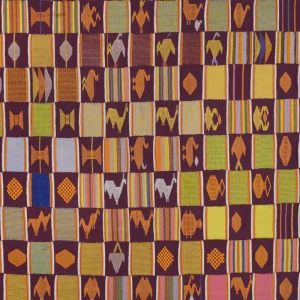
Ewe weavers (in southeastern Ghana’s Volta Region and parts of Togo) have a strong, parallel tradition. They argue for earlier or independent origins, sometimes claiming they taught or influenced Asante weavers.
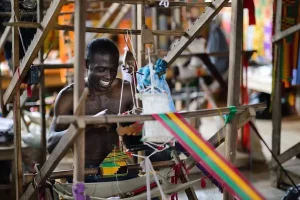
According to their oral tradition, weaving arrived from the east through Notsie in Togo or earlier migrations. Some Ewe accounts describe “Kete” as the authentic term and suggest Asante learned the craft during interactions or conquests. Ewe cloths could include figurative motifs like animals, objects, scenes tied to proverbs or daily life, woven in cotton with more variety for non-royal use.
Often feature weft floats, speckled effects, and storytelling elements. Less centralized, so Kete was prestigious but more accessible. Centres like Agotime or Anlo areas are highlighted.
Ewe had horizontal loom weaving traditions predating heavy Asante contact. Under Asante rule in the late 18th century, some Ewe adopted or adapted Asante-style production, but others maintain they had it earlier. Debates intensified in the 1990s in Ghana, with Ewe sources pointing to linguistic evidence (“Kete” as original) and claims of Asante appropriation.
Ewe Kete is celebrated for its complexity and diversity; some weavers and advocates assert primacy based on older cotton examples or specific museum pieces dated to the 1500s or earlier in Ewe contexts.
Academic generally avoid declaring a single “first” inventor due to limited pre-colonial written records and the fluidity of cultural exchange. Weaving techniques likely developed independently or in parallel in the two regions, with influences flowing both ways. Comparisons of looms, warp setup, and terminology show similarities but also distinctions.
No clear winner on primacy: Historians like Philip Atsu Afeadie note Kente grew from “various weaving traditions” across West Africa before the Asante Kingdom formed. Ewe had prior horizontal loom experience. Asante refined silk versions into royal symbols during their empire’s peak. Mutual influence is evident.
Malika Kraamer’s research on Ewe textiles from 1800–2000 details design evolution and social history; PA Afeadie’s article compares beginnings of Ewe and Asante weaving both treat Asante and Ewe as co-producers of “Kente” broadly. Origins are “uncertain” or “debated,” often placed in the 17th century for the vibrant form we know, with deeper roots.
Conclusion: “Who Wove It First?”
There is no definitive, undisputed “first” weaver. The craft likely evolved from older regional strip-weaving practices involving multiple groups (including possible Akan/Ewe precursors and influences from farther afield like the Niger Delta or Hausaland).
The Asante popularized and refined the iconic colourful, geometric silk Kente as a symbol of empire and royalty in the 17th–18th centuries, centring it in Bonwire. Hence should be credited as the first to weave Kente clothing.
Sources like museum records (British Museum, Metropolitan Museum), academic papers, and overviews from Khan Academy or Smarthistory often describe Kente as emerging or fully developing among the Asante, with roots in broader Akan or West African traditions. Some date prominent silk Kente to the 17th century in Asante heartlands.
On the other hand, the Ewe should be credited for their Kete cloth.
The Ewe maintained and developed their Kete tradition with distinctive figurative elements, possibly with earlier cotton-based weaving in some areas, and contributed significantly to the broader style.
Both communities deserve credit for sustaining and innovating this living art. Modern Kente/Kete is a Ghanaian (and Togolese) treasure shaped by exchange, not ownership by one ethnicity.
The sensitivity arises from ethnic pride, but the cloth’s beauty lies in representing shared West African ingenuity and, today, pan-African identity.
The debate enriches the story rather than diminishing either group’s contribution.
Sources
Adom, D. (2024). Asante Kente: a home craft and a cultural repository of the place identity history of the Asantes. Sage Open, 14(1), 21582440231224780.
Afeadie, P. A. (2013). Beginnings of Ewe and Asante weaving. Transactions of the Historical Society of Ghana, (15), 27-38.
Asamoah-Yaw, E., & Safo-Kantanka, O. B. (2017). Kente cloth: History and culture. Xlibris Corporation.
Kriger, C. E. (2006). Cloth in west African history (Vol. 9). Bloomsbury Publishing PLC.
Gyasi, I., Daitey, W., Tettehfio, L. A., Asmah, A. E., & Seid’ou, K. K. (2025). Textile Innovations in Pictorial Scenery in Traditional Weaving: A Socio-Cultural Exploration of Asante Kente and Ewe Kete Traditional Weaving Techniques. Journal of Innovations in Art and Culture for Nature Conservation and Environmental Sustainability, 3(2).


